


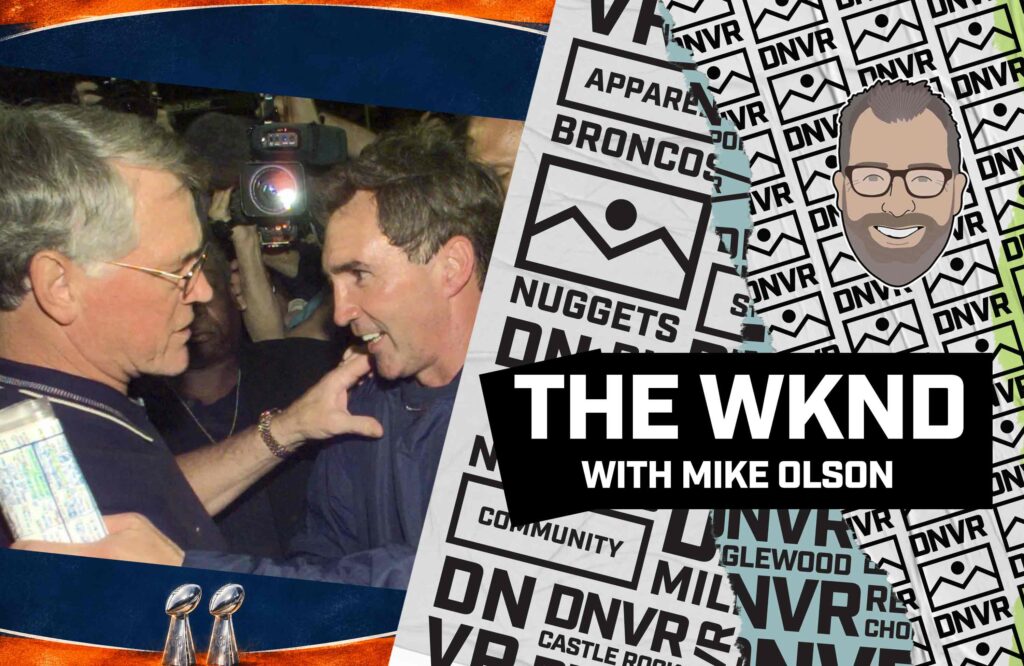
“Thanks, Dan, for giving me an opportunity in the NFL.”
– A (hopefully) future Hall of Fame coach
On Thursday, the Pro Football Hall of Fame announced five coaching candidates still in contention for its Class of 2027. Bill Belichick, Tom Coughlin, Mike Holmgren, Dan Reeves, and Mike Shanahan. Five men who have collectively made an awful lot of football fans very happy or wholly infuriated.
For Broncos fans, two of those names brought a lot of joy and carry a particular bit of weight.
And while only one of the five will advance to the final round of consideration later this month, it’s worth spending a little time appreciating just how much those two men gave to a franchise that has spent much of the last half-century expecting to be amongst the best in football. Because those expectations didn’t come from nowhere.
I was a young kid when the Broncos made their first Super Bowl appearance in January 1978. My family had moved to California a few years earlier, and I remember feeling very far away from Colorado, perhaps for the first time. I’d gotten Lyle Alzado’s signature while I was home visiting my dad at Summer Camp in 1977, at the beginning of that huge year, and there was something about watching Red Miller, Craig Morton, and that remarkable Orange Crush defense representing the place I still thought of as home that made those miles feel a little longer. Maybe a lot longer.
The Broncos lost to Dallas that day, 27-10. It was a tough introduction to the particular heartbreak of being a Denver football fan, though we’d eventually become pretty damned proficient at that particular exercise.
But Red Miller had done something extraordinary. He’d taken a franchise that had never even reached the playoffs to 12-2, and brought it all the way to the Super Bowl. He’d shown us what was possible.
Dan Reeves was the man who made us believe that possibility could happen again. And again. And again.
I’d just moved home to Colorado when Reeves arrived in Denver in 1981, a 37-year-old former Dallas Cowboys player and assistant who had already experienced championship football from both sides of the sideline. Within a few years, he’d helped bring John Elway to Denver, and the two began one of the most successful, occasionally contentious partnerships in Broncos history.
Over 12 seasons, Reeves won 110 regular-season games, five division titles, and three AFC championships. His teams reached the playoffs six times and suffered only two losing seasons. Most remarkably, those three Super Bowl appearances came in a four-year stretch, against the Giants, Washington, and San Francisco.
They lost all three. Sometimes spectacularly. I remember watching just how damned spectacularly.
And yet, think about what that represented. Before Reeves, the Broncos had reached one Super Bowl in their entire existence. They couldn’t keep that momentum, a big part of what brought Reeves there. By the end of the 1980s under Reeves, getting there had become something approaching an expectation. Losing those games hurt so much precisely because he (and Elway) had made winning enough to reach them seem almost routine.
That’s a hell of a thing to give a fan base.
It wasn’t always a smooth ride, of course. Reeves and Elway had a relationship that could generously be described as complicated. The coach was demanding, disciplined, and sometimes hyper-conservative. His quarterback was a generational talent who could make plays that hadn’t occurred to the men drawing them up. Those two approaches didn’t always fit neatly together. Sometimes Reeves used his quarterback-bazooka like a pea-shooter, and it enraged Elway, and a lot of Broncos fans.
Adding another wrinkle of complexity, Reeves had another young coach on his staff who saw some of the same possibilities in Elway that the quarterback saw in himself. A gentleman named Mike Shanahan.
Shanahan joined Reeves’ staff in 1984 and became offensive coordinator the following season. Together, they helped build the offenses that took Denver to consecutive Super Bowls following the 1986 and 1987 seasons. Shanahan and Elway developed a particularly close working relationship, one that would eventually become central to the franchise’s greatest successes. But we’ll get back to that part.
That bond also contributed to tensions with Reeves, and the professional relationships eventually fractured. Shanahan left to coach the Raiders, returned to Denver for another stint under Reeves, and was fired following the 1991 season. Reeves himself was gone a year later. Elway may or may not have been a voice in that decision.
There’s plenty of history buried in those disagreements, including the rather memorable decision to draft quarterback Tommy Maddox in the first round in 1992, while a certain John Elway was still employed at the position. Apparently, not everyone agreed on the Broncos’ immediate personnel needs. Tommy Maddox. Good lord.
But the fascinating part of this story isn’t really about who was right or wrong. It’s about what happened after those relationships came apart.
Shanahan spent several seasons helping build another championship offense in San Francisco before returning to Denver as head coach in 1995. He inherited a franchise whose expectations had been elevated by Reeves, a quarterback who had spent his career chasing the championship that kept escaping him, and an opportunity to finish something both men had started. And finish it he did.
The Broncos won Super Bowl XXXII against Green Bay following the 1997 season, finally bringing the Lombardi Trophy home after four unsuccessful appearances. They followed it with another championship the next year, defeating Atlanta in Super Bowl XXXIII. Atlanta’s head coach?
Dan Reeves.
Of course it was. The man who had brought Elway to three Super Bowls, and the man who had finally helped him win one, met on football’s biggest stage for the quarterback’s final game. Shanahan and Elway won their second consecutive title, while Reeves suffered his fourth Super Bowl defeat as a head coach. Elway even walked away as the MVP of that game, and then walked away from the game for good. Talk about a mic drop.
It’s difficult to imagine a more extraordinary intersection of those three careers, or a more bittersweet one.
And Shanahan’s contributions extended well beyond those championships. His offensive systems, particularly the marriage of an effective running game with the passing opportunities it created, helped influence an entire generation of NFL coaches. His Denver teams were routinely amongst the league’s most productive offenses, and his coaching tree continues to reach into today’s game, including a coach who just so happens to bear his last name, and who also was a ball boy and cord boy for his dad during those formative seasons.
Reeves had established that Denver belonged amongst the contenders. Shanahan demonstrated that the Broncos could be the best of them.
Neither man was perfect. Both were demanding, occasionally stubborn, and capable of making decisions that drove fans, players, and probably their own families a little crazy. But it’s worth remembering that the standards by which we judge today’s Broncos were largely built by these two giants and few others around them.
When we get frustrated by a mediocre season, or impatient with a team that doesn’t look capable of competing for a championship, we’re reacting to expectations that didn’t exist in Denver’s earliest years. Expectations these coaches helped create.
John Elway, the common thread through so much of that history, eventually returned to the franchise as an executive and helped assemble another championship team, culminating in Super Bowl 50 following the 2015 season. The quarterback who had learned to pursue excellence under Reeves and Shanahan was now helping demand it from an entirely different position.
Three Lombardi Trophies. Eight Super Bowl appearances. Generations of fans who came to believe their team ought to be in the conversation every year. That’s an extraordinary legacy, even if it occasionally makes us a fairly insufferable bunch.
Dan Reeves passed away on January 1, 2022, nearly five years ago now. In the days following his death, two men who had experienced some of the most difficult moments of their professional lives alongside him offered reflections that said far more about his legacy than any accounting of their disagreements ever could.
Elway acknowledged that he and Reeves hadn’t always seen eye to eye, but credited his former coach with helping him grow into the quarterback he became. He called Reeves a winner, and made clear that he believed his former coach belonged in Canton.
And Shanahan said something that might be the finest summary of what these men accomplished together:
“Dan’s three Super Bowls in four years set a standard and culture in Denver that anything less was unacceptable.”
He also expressed his hope that Reeves would someday be inducted into the Hall of Fame. And then he closed his tribute with the words that opened this column.
“Thanks, Dan, for giving me an opportunity in the NFL.”
Mike Shanahan… the man who eventually surpassed his former mentor’s championship accomplishments, but never forgot who helped give him his start.
Belichick may well be the favorite to advance this year, particularly after the controversy surrounding his failure to earn induction in 2026. Reeves and Shanahan may have to wait a little longer for their rightful recognition. If I were a betting man, I’d put my money on Bill. But my heart is with Mike and Dan both. I hope both eventually receive it.
The shame is that they won’t get to enter Canton together, whenever those honors finally arrive. In the midst of a lot of drama, they surely shaped each other’s successes and legacies. It’s softened a lot of hearts in Denver that Reeves won’t be there to share the moment at all.
But they’ve already shared something much larger, something that belongs to generations of Broncos fans, including one kid who was just thrilled to finally be back home. Mike and Dan? They helped make Denver a place where excellence became the expectation.
What a wonderful legacy to leave behind.