© 2026 ALLCITY Network Inc.
All rights reserved.



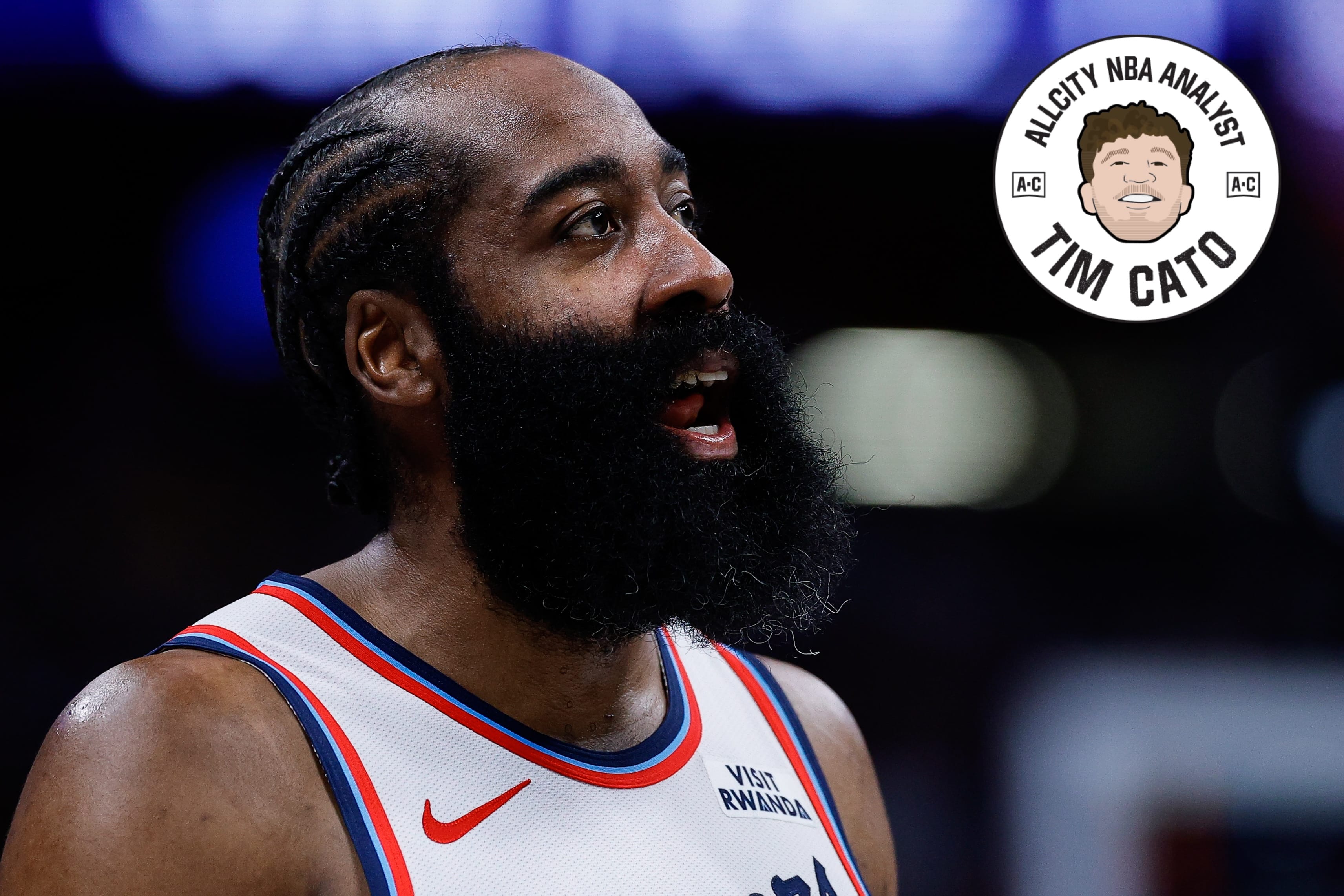
The NBA’s trade deadline, we feared, would be quiet. The league’s passivity has instead faded this week into a flurry of odd smaller moves and some feast-worthy larger ones. We’ll see what else Thursday’s finality brings us. Giannis Antetokounmpo, actually moved? Ja Morant relocating to Miami or Chicago? DeMar DeRozan, for some reason, to Los Angeles? Who else? Which already moved player, whose fit on his new team we just started grappling with, gets suddenly rerouted again? For 30 phone numbers, there are moves we haven’t even anticipated just one call away. (do it i dare you gm reading this)
Post-deadline update: Antetokounmpo, Morant, DeRozan, and some other names thought to be possible moves did not. But we
There have, thus far, been 14 moves. Certainly, some have been more significant than others, but I’ve listed and graded all of them, to the best of my ability still hours away from pencils being put down, as they stand alone. Instead of a single trade grade, I’ve chosen to use grade ranges. It’s my attempt to get away from the inherently reactive nature of trade grades, to assign more thought to the process of the deal than what actually results from it.

For teams involved purely for salary dump reasons, I’ve mostly listed their grades as: ¯_(ツ)_/¯. I haven’t thought of this emoticon in ages; it’s the last gasps of the cringe millennial inside me. It’s also more fitting than any other idea I came up with to express this feeling: It’s obviously almost always good, if you have cap space, to snag a second-rounder or two in exchange for taking on salary. Or even cash considerations, bless you. But the reason you have space in the first place is that your players you acquired aren’t good enough to pay and you instead chose this route on purpose. I don’t feel you need my personal pat on the back for that. It doesn’t jive with serious trade analysis; I still wanted to account for every team’s perspective.
This post was continually updated after new transactions up until Thursday’s 3 p.m. Eastern deadline passed earlier today. Every move is listed here, although some of these deals may end up being folded into other deals to create three- or four-team trades for salary cap reasons.
Feb. 5: Boston ends the deadline with a thud
Celtics get: Cash considerations
Hornets get: Xavier Tillman
Don't like ads?
This was an exciting deadline even if Giannis Antetokounmpo wasn’t traded, but it ran hot on Wednesday before the news died off before the deadline. In that sense, this is a fitting final move for the league. See y’all next year.
Celtics get: ¯_(ツ)_/¯
Hornets get: ¯_(ツ)_/¯
Feb. 5: Mavs finally get a point guard
Hornets get: Malaki Branham
Mavericks get: Tyus Jones
Charlotte snared two seconds for taking in Jones and then immediately swapped him for a lower salaried expiring while creating a trade exception. That’s fantastic work from them. Dallas seems interested in Jones actually playing for them this season. Jones hasn’t been good this season, the first performance decrease of his career, but he’s probably better than Ryan Nembhard, the team’s rookie guard on a two-way contract that has almost run out of eligible games to play. If Jones can add more stability to the court that helps Cooper Flagg the rest of the season, that’s a win. He’s no longer good enough to affect winning to the extent it’d really change the team’s draft odds. But it’s a strange move even if there aren’t really any downsides for Dallas.
Hornets grade range: A to A-
Mavericks grade range: B to B-
Feb. 5: The Pacers find their center
Pacers get: Ivica Zubac, Kobe Brown
Clippers get: Bennedict Mathurin, Isaiah Jackson, 2026 first-rounder (protected 1-4, 10-30), 2029 first-rounder, second-rounder
Don't like ads?
Zubac’s price was never going to cheap; L.A. had signaled mostly that it wasn’t interested in dealing the 28-year-old center. But Indiana was willing to include its first this season with a strange protection: The Pacers keep it if it lands in the top-four or if it’s worse than 10th. Basically, the Pacers’ timeline, starting again next season, is to contend now. They’d like that top-four pick, of course, which is where the truly franchise-altering players will be taken in this coming draft. (The best prospects are taken first, obviously, but there are multiple such franchise-altering prospects this time around.) What L.A. has really done — assuming the Pacers get their wish — is buy put options on the Pacers’ longterm future. Indiana should be great again next season; they’re burning draft capital to make sure of it. But great teams can last for three or four years especially under the current CBA. If Indiana’s pick ends up top-four, then the Pacers would instead owe L.A. a 2031 first-rounder. It’s fundamentally a futures bet; there’s also a 50/50 chance, give or take, that Indiana conveys a mid-lottery selection to L.A., too. A player drafted there might not help Indiana contend next season; the Clippers have more patience.
I love Zubac’s fit in Indiana. He was the best center moved this deadline (since Jaren Jackson Jr. is, in fact, a power forward) and will add another dimension to what made Indiana successful last season without disrupting that chemistry.
It’s a high variance move both directions. If the Pacers get a top-three pick, improving next year’s roster while also adding a star to buoy them in the future once this core ages out, that’s an outright win and could diminish what value Indiana’s future first have to the Clippers. The Pacers could also hand over the fifth overall pick; they could’ve seen where it landed and made this same move around the lottery. But would L.A. have accepted any other offers then? This is the most mind-bending mental exercise we’ve faced this deadline.
Pacers grade range: A- to C
Clippers grade range: A- to C-
Feb. 5: Nuggets open a roster spot
Nets get: Hunter Tyson, 2032 second-round pick
Nuggets get: 2026 second-round pick (least favorable of LAC or ATL)
This was a certain salary dump that Denver always planned to make. The front office needed another roster spot to convert Spencer Jones from his two-way deal, and now have it at the price of a marginal second.
Don't like ads?
Nets grade range: ¯_(ツ)_/¯
Nuggets grade range: B, banal execution of a needed move
Feb. 5: Alvarado goes to New York
Knicks get: Jose Alvarado
Pelicans get: Dalen Terry, two second-round draft picks, cash considerations
New York has realized Jordan Clarkson isn’t the type of player they needed off its bench. Alvarado might be a smaller guard, but he’s certainly more disruptive defensively than Clarkson has ever been and can bring more tempo and heart to a roster that, at times, hasn’t shown that. It’s possible he just isn’t impactful in the postseason for them, which is the crux of the Knicks’ gamble here. But I like the process.
Knicks grade range: B+ to C+
Pelicans grade range: B to B-
Feb. 5: A three-team deal!
Bucks get: Nick Richards, Nigel Hayes-Davis, Ousmane Dieng
Suns get: Cole Anthony, Amir Coffey
Bulls get: Nick Richards
This is three teams moving deck chairs for the sake of financial implications. Coffey might be mildly useful for Phoenix, but that wasn’t the driving force behind this deal.
Don't like ads?
Bucks grade range: ¯_(ツ)_/¯
Suns grade range: ¯_(ツ)_/¯
Bulls grade range: ¯_(ツ)_/¯
Feb. 5: Sixers and Grizzlies do a nothing swap
Grizzlies get: Eric Gordon, 2032 second-round pick swap
76ers get: 2032 second-round pick swap
¯_(ツ)_/¯
Lakers grade range: ¯_(ツ)_/¯
Hawks grade range: ¯_(ツ)_/¯
Feb. 5: Kennard heads to Los Angeles
Lakers get: Luke Kennard
Hawks get: Gabe Vincent, 2032 second-round pick
Kennard’s currently the league’s best percentage shooter, hitting almost half of his 3s (49.7 percent), even if he’s never taken enough of them. Los Angeles needed a knockdown shooter; they needed defenders more than that, and the Lakers failed to make any other moves happen but this one. It’s a bit underwhelming in the grand scheme of things, but adding shooters to a team led by Luka Dončić is never bad. For Atlanta, sure, Kennard had become somewhat redundant. I’m fine with it.
Lakers grade range: B+ to C
Hawks grade range: B to B-
Don't like ads?
Feb. 5: Minnesota makes a move
Timberwolves get: Ayo Dosunmu
Bulls get: Rob Dillingham, Leonard Miller, four second-rounders
That’s … a lot of draft capital for Minnesota to concede for Ayo Dosumnu when, last summer, they chose not to sign Nickeil Alexander-Walker to a four-year, $61-million deal. Donsumnu is a really nice player who does similar things to Alexander-Walker; he’s also an expiring contract currently making $7 million. Next season, the Timberwolves will have to pay him around the same amount of money. That said, they’ve needed a player like him ever since Alexander-Walker departed. Just find the exact sequences of these events to be curious.
Timberwolves grade range: A- to C+
Bulls grade range: B+ to B-
Feb. 4: Bulls snag a buy-low big
Bulls get: Guerschon Yabusele
Knicks get: Dalen Terry
Guerschon Yabusele was a good-process-bad-results play for New York this past summer. I’m still confused he made no impact. He seems like a good dude who’s on a quest to get five years of tenure and lifelong medical care; Chicago provides him a situation with lower stakes to try to find his game again after his successful return to the NBA last season in Philadelphia. While I don’t see Dalen Terry as a needle mover for the Knicks, maybe they do. More likely, Terry’s expiring contract is just more appealing than Yabusele, who will opt into his player option next season barring some spectacular play. And, since writing this, Substack’s Jake Fischer has reported that New York’s thinking was similar to my hunch.
I’m sorry, but I must note this: Yet again, Chicago traded for a player its franchise was determined to move and didn’t get a pick out of it. I don’t think it’s egregious they didn’t in this instance. But it keeps happening. Maybe this is why they’re such a beloved front office for others to come to with deals.
Don't like ads?
Bulls grade range: B- to D+
Knicks grade range: ¯_(ツ)_/¯
Feb. 4: Warriors make another move
Raptors get: Trayce Jackson-Davis
Warriors get: The Lakers’ 2026 second-rounder
I’m not the first to report this, but I know Toronto had interest in Domantas Sabonis. I’m giving them a B-plus on this trade’s upper outcome solely for the fact they didn’t trade for him, a player I really wouldn’t want to be added to their amalgamation of basketballers. But Toronto snagging some sort of center was inevitable; Jakob Poeltl isn’t likely to play again this year, I’ve heard. To go with Trayce Jackson-Davis, a perfectly fine replacement-level backup, is good enough work. If he’s not good enough, you can second guess this trade not for its cost — nearly nothing — but that Toronto didn’t aim higher. But we’ll see how the totality of their deadline plays out.
Raptors grade range: B+ to C+
Warriors grade range: ¯_(ツ)_/¯
Feb. 4: Our too long Kuminga nightmare ends
Hawks get: Jonathan Kuminga, Buddy Hield
Warriors get: Kristaps Porziņģis
Never has more ink been spilled, to borrow our own Marc Stein’s verbiage, on a player as middling as Jonathan Kuminga. At last, Kuminga has moved on from Golden State, where he was caught between multiple power dynamics — old timeline vs. new, front office vs. Steve Kerr — and turned into each side’s punching bag. It’s been a difficult situation for a young player, still just 23, to manage. But one clear way he could’ve managed it, of course, was on-court excellence. For all his flashes, Kuminga has not consistently been an impactful on-court player.
Don't like ads?
Why Atlanta moved for two spacing backup fives, Duop Reath and Jock Landale, now makes more sense. (And Reap won’t help this season; he’s out for the year.) The Hawks didn’t offer send out draft capital for either trade, but they didn’t have to land Landale as a third team. Landale has been a bit better this season, but both would fill a similar role, one far more redundant if Porziņģis stuck around and ever played. Instead, the Hawks preloaded its frontcourt with new depth before altering it with more intention. Porziņģis changed their team for the better when on the court this season; he just wasn’t out there enough for it to matter. He’ll make Golden State better, too, when he plays. It’s just a question of how often. But they needed to move on from Kuminga; selling low for an older player was a smart coupling of trade interests for these two teams’ respective timelines.
Kuminga’s expectations for his career exceed his talent, which is high but not boundless. He’s an unlikely star but an interesting talent play for a team banking now on next season; Atlanta hasn’t sent out any picks during this roster shakeup. (I must admit: I don’t think Atlanta is doing all this because they’re going to trade for Giannis Antetokounmpo but, if it did happen, I would see the logic behind these moves to deal for him. This hinges on Milwaukee believing that Kuminga meets their young prospect criteria, which I can’t believe they would.) What Kuminga should be aiming to be, of course, is a do-it-all disruptive forward who does drop 25 some games but can also accept nights where he gets just five shot attempts in 19 minutes. Away from Golden State’s media vise grip, fitting into a team rather than standing out, can he do that? I’m higher on Kuminga than most of the other athleticism-and-talent-and-no-3 test kits who want roles larger than their talent. I’m still skeptical.
Kuminga’s team option next season does mesh well with the team’s current outlook: Let him loose, see how it goes, try to herd him into a productive role, and the Hawks can always just decline that $24.3 million he’s owed if it doesn’t work. (They’ll do that, right? They aren’t going to be bullied into an extension? I’m giving them too much credit, perhaps.) Even though Porziņģis was good when he played, he doesn’t fit Atlanta’s new timeline all that well. The Hawks still aim to contend soon, but there’s more time to see where New Orleans’ pick falls next year and reassess how quick this rebuild should go.
I liked Vit Krejčí more than both Luke Kennard and now Buddy Hield, if only because he was a more enjoyable watch, but Hield’s addition also reestablishes two bench shooters for the Hawks. I don’t love the $20 million remaining on Hield’s contract the next two seasons. It’s fine. Whatever. They’ve got a couple years to figure it out.
Hawks grade range: A- to C-
Warriors grade range: A- to B-
Feb. 4: Orlando dumps Tyus Jones’ contract
Hornets get: Tyus Jones, two second-rounders
Magic get: cash considerations
Don't like ads?
This trade is for front office spreadsheets and little else. Tyus Jones is clearly winding down his career while his brother, Tre, has finally surpassed him for the first time in each players’ career.
Hornets grade range: B to B-
Bulls grade range: ¯_(ツ)_/¯
Feb. 4: Chris Paul gets traded (to be waived)
Nets get: Ochai Agbaji, one second-rounder
Clippers get: draft rights
Raptors get: Chris Paul
Toronto is reportedly expected to waive Paul. I hope someone picks him up and plays him, even sparingly, because he’s earned that. This is another trade that’s mostly for the spreadsheets.
Nets grade range: B- to C+
Clippers grade range: ¯_(ツ)_/¯
Raptors grade range: ¯_(ツ)_/¯
Feb 4: Hornets surprisingly get Coby White
Hornets receive: Coby White, Mike Conley
Bulls receive: Collin Sexton, Ousmane Dieng, three second-round picks
Thunder receive: Mason Plumlee (waived)
Don't like ads?
Coby White was always being traded at this deadline. But the league had widely assumed, according to sources I spoke to, that he would be headed to the Houston Rockets. (I was on the phone with an assistant coach when this trade’s notification went out and heard firsthand his mild shock realizing Charlotte was the landing spot.) But the Hornets have, in fact, used White to replace Collin Sexton, who’s having an excellent season for the Hornets. I think it’s a marginal upgrade at best, but White might be better served to raise the team’s ceiling in games that LaMelo Ball isn’t available. I’m unconvinced of that, but that’s my best guess at the logic. And it should be noted that Chicago’s tempo, similar to Charlotte’s, has been upbeat and pass-heavy this season. I don’t think Charlotte, who finished January as the NBA’s best team in point differential, will get worse due to this swap. Will White make them better, though, to justify trading three seconds?
Chicago’s trades, increasingly, need the team’s full deadline context to grade correctly. Ousmane Dieng isn’t particularly likely to hit his upside, at this point, but the Bulls can give it a go for fun. Chicago once again failed to find a first-round pick when trading a veteran; most of the trades, in a vacuum, are defensible, but the lack of draft capital acquisition remains a black spot on its front office’s record. I’m giving Chicago a wide grade variance. We’ll see when the dust settles. Charlotte’s will be smaller. This trade should’ve hurt them or their long-term goals, but we’ll see if it was necessary.
Hornets grade range: B to C+
Bulls grade range: B to D-
Thunder grade range: ¯_(ツ)_/¯
Feb. 4: Hawks get another backup big
Hawks get: Jock Landale
Jazz get: Lonzo Ball, cash considerations
Cavaliers get: Two seconds
Utah rerouted Landale after his inclusion in the Jaren Jackson Jr. trade, which was inevitable. I’m mildly surprised they couldn’t sneak out a second-rounder since he’s a useful player, a decent backup big who has finally turned into a reasonably capable stretcher, but that doesn’t really matter. Atlanta also acquired a similar backup big, Duop Reath, but he’s out for the season. Both are replacement-level bigs with similar skillsets.
Hawks grade range: B- to C-
Jazz grade range: ¯_(ツ)_/¯ unless they use that cash to bribe Ernst & Young this May
Cavaliers grade range: ¯_(ツ)_/¯
Don't like ads?
Feb. 4: Thunder nab Jared McCain
Thunder get: Jared McCain
Sixers get: 2026 first-round pick, three second-round picks
Oklahoma City may still have moves coming; league sources are certain that Isaiah Hartenstein will depart after this season, and the Thunder have some inclination to get ahead on it. (They probably won’t, but Hartenstein’s name hasn’t been buzzy for no reason.) Sam Presti did dive into his war chest of draft capital, however, to acquire McCain, a synergistic player who had fallen to the edges of Philadelphia’s rotation, at a reasonable-but-not-nothing cost. McCain hasn’t been this season the player he was through 23 games his rookie year. He’s looked slower after two surgeries — the second, on his thumb, was unfortunate but inconsequential; the first was a meniscus operation that cost him most of his first season — and he’s too small to be anything except a passably below-average defender. He’s not quite the shooter that Isaiah Joe has been his whole career, neither in quantity or quality. He’s also 21. He isn’t a star talent, but he absolutely may keep getting better.
The Thunder still need shooters; McCain instantly becomes their best behind the arc past Joe. He’s a more reliable ball handler and play initiator than him, another thing Oklahoma City needs, something clearly shown during Ajay Mitchell’s recent absences. McCain’s overall skillset may be one the Thunder find better use for than Philadelphia could; he could also play 12 total minutes in the conference finals if he’s no better than what he’s been for the 76ers of late. This isn’t anything resembling the Thunder’s Gordon Hayward deal. It’s a higher upside swing on a mystery box candidate.
Right now, from what I’ve seen from McCain this season, I’m unconvinced he’d be a postseason rotation regular due to his targetability and size. He’s not a game-breaking shooter to make up for that. But meeting his more positive outcomes wouldn’t shock me, either, especially after Oklahoma City gave him this stamp of approval. In fact, this is the first time since 2015 that Sam Presti has traded a first-round pick for a player.
For Philadelphia, who I’d assume shares this assessment on McCain’s ceiling to be willing to trade him, they better be right. Daryl Morey screwing this up matters far more than my blurb here. That’s why I have Philadelphia’s worst grade this low. It’s not an F; McCain isn’t a future superstar. He still has more untapped potential, however likely he is to hit it, than most players in the league right now. Four draft picks, even lesser valued ones, is a solid return. I’d like to see them be used for something substantial, which is what the A-minus grade hinges on. If this was part of a broader plan, let’s see it, and it’d probably lead me to feel better about this deal. In the meantime, even coming from someone slightly lower on McCain than most, it’s still nervy to deal someone like this. Even while I hesitantly agree.
Thunder grade range: A- to C+
Sixers grade range: A- to D-
Don't like ads?
Feb. 4: Dallas departs from Nico’s vision
Wizards get: Anthony Davis, Jaden Hardy, D’Angelo Russell, Dante Exum
Mavericks get: Khris Middleton, AJ Johnson, Malaki Branham, Marvin Bagley III, two first-round picks, three second-round picks
I hadn’t expected Dallas to get any deal done, and league sources were equally pessimistic about Davis’ trade market. Without Washington’s entrance to these sweepstakes, it’s almost certain the Mavericks would have been forced to retain Davis, league sources tell me. But Dallas did find its trade for Davis, which fully separates this franchise from its last remaining reminder of Nico Harrison’s Luka Dončić trade and reorientates them around Cooper Flagg, who has scored 119 points in his past three games. It’s now unquestionably his franchise and his future.
Dallas didn’t get good picks: Oklahoma City’s 2026 first-rounder; Golden State’s 2030 first-rounder with top-20 protections; Phoenix’s 2026 second-rounder; Chicago’s 2027 second-rounder; Houston’s 2029 second-rounder. But Dallas, prior to this deal, only had three picks they could move. (Those were their own 2032 first, their 2032 second; and Philadelphia’s 2031 second.) Recouping such lousy draft capital, like Dallas did in this deal, isn’t stellar in the broader context of what Dallas traded for Davis. But in its current state, Dallas’ front office was an engine needing oil. Any pick outside the top-20 should be seen as something closer to transactional currency than a lottery ticket. Sometimes, you just need a couple spare seconds to move bad money to a team with cap space or move a decent role player for a slightly better one. Dallas has re-greased its transactional power by acquiring more picks; it also moved off its cap sheet’s three least valuable contracts in Davis, D’Angelo Russell, and Jaden Hardy. All three players were Harrison acquisitions; Dallas truly has a clean slate, give or take a Caleb Martin still hanging around, from Harrison’s failed administration.
It’s amusing that Marvin Bagley III, a player drafted over Dončić in 2018, was included in this deal. He’s been a quality backup big man this year, mind you, but we’ll see if Dallas has any interest in him beyond his expiring contract. AJ Johnson is an acceptable flyer on a flier. (Don’t expect much, though. For all his athleticism, he has three career blocks in 857 career minutes.) Khris Middleton will almost certainly get moved or bought out — he very much did not enjoy the Jason Kidd experience in Milwaukee, mind you — freeing a roster spot for Ryan Nembhard or Moussa Cisse to be converted to a full-time contract. Malaki Branham could be waived, too, to allow them to sign the other. I haven’t heard Dallas’ definitive plans on any of them. I know Dallas remains open, for all these players, to reroute them again if another deal arose. Bagley feels likeliest to attract such interest, but we’ll see.
For Washington, this grade’s less about Davis himself and more about the franchise’s choice for its timeline. If this was the appropriate moment, between this deal and Trae Young’s, for Atlanta to hit the big green ‘go’ button. It’s possible, even if it obviously can’t be believed until seen, that Davis can use the rest of this season to reset his body and stay available more reliably next year. He’ll be the most talented big man Young has ever played with but isn’t quite the traditional rim runner like Young prefers. If Alex Sarr was just a bit more reliable behind the arc, he’d be the ideal four-five hybrid to pair with Davis, another four-five hybrid. Davis insists on guarding fours when he’s offensively best as a five. Sarr could be his ideal front court pairing as an offensive four, defensive five. I’d argue his best role would be flipping it, but he’s versatile enough to be either. There aren’t many players like that.
Washington’s young core still doesn’t have its gravitational star to build around, but those prospects do need more stability than C.J. McCollum and Khris Middleton provided this year. If the Wizards land that player in the lottery and if Kyshawn George takes another step next season, then Washington’s pedal to the gas will make sense. But they hit the accelerator before making sure they were fueled up. They can’t get tempted into a lucrative Davis extension, sure to age poorly, even if he can stay on the court for an extended stretch next year. Currently, I see them as a team that would plateau as a fringe top-six squad in the Eastern Conference at best. It could work out, but there are enormous downsides to this move, too, despite the minimal cost it took to swing on Davis’ obvious talent.
Don't like ads?
Wizards trade range: A- to D-
Mavericks trade range: A- to B-
Feb. 3: Harden for Garland is the biggest trade yet
Cavaliers get: James Harden
Clippers get: Darius Garland, second-round pick
Cleveland’s success in this trade depends on whether they win a championship this year or next, or at least convince Donovan Mitchell to re-sign with them. He was a driving force behind this move, per The Athletic, which led to the Cavaliers making a future-limiting move to move off Garland. But Cleveland isn’t living in the future. This team wants to win now; it might even bring home LeBron James next year for his final season. Right now, Garland can’t be trusted to stay on the court. Harden, for all his postseason foibles, is an ironman in the midst of his best season (probably) since leaving Brooklyn. It’s a sensible move given Cleveland’s immediate goals. That they had to send a draft pick despite trading for the much older player, who has a lower ceiling than what Garland’s absolute best provides them, is unfortunate. But it’s a sensible process.
But this trade has still earned the widest grade range seen thus far this week because Cleveland has staked a title upon it. Beyond that, if Garland finds his All-Star level again with the Clippers, this move will look worse if it lacks near-term success. For L.A., even as the team’s recent play has forced its podcasters to eat paper, this year won’t end in them being contenders. Taking an upside swing on a proven star, one with far less baggage than, say, Ja Morant, makes sense. It’s reasonable. It’s sunk cost to obsess over not conveying a good pick to Oklahoma City, who the Clippers owe their first-rounder to. But the Clippers shouldn’t bottom out; it’s Kawhi Leonard and the youngsters who have driven this recent success despite Harden’s superb season.
All that said, Oklahoma City still must have been pleased to see this deal.
Cavaliers grade range: A+ to D+
Clippers grade range: A+ to B-
Thunder grade range: A+ even if it’s likely ¯_(ツ)_/¯
Don't like ads?
Feb. 3: Celtics get a new Al Horford
Celtics get: Nikola Vučević, second-round pick
Bulls get: Anfernee Simons, second-round pick
Boston realized it needed more size this season after some recent losses, most specifically those to the Detroit Pistons, and Vučević has proven his NBA heft. He’s a stretchy big, too, who has averaged more than five 3s per 36 minutes the past six seasons on 35.5 percent shooting. I see him platooning with Luka Garza as the team’s backup center: against some opponents, Garza’s higher offensive ceiling may make sense; against teams with larger frontcourts, Vučević makes far more sense despite him being less potent behind the arc. Vučević could certainly displace Garza’s role entirely, too. But there’s logic here.
It still hurts to move away from Anfernee Simons, a proper sixth man candidate who had nailed 44 percent of his 3s this calendar year before this deal. Joe Mazzulla moved Payton Prichtard to the bench in Boston’s last game to replicate Simons’ role; they won’t lose much in 3-point volume. But they’ll lose a little explosiveness, and it’s their offense that has powered them this year. Vučević will help them rebound, but he’s certainly not a shot blocker. Where this move will make sense, specifically, is if Jayson Tatum does return this year. If he does, Simons’ minutes would probably have been further squeezed and Vučević’s versatility would prove useful. If Tatum doesn’t, if Vučević doesn’t add much to a short postseason run, and if he isn’t retained on his expiring deal, then Boston made a needless swing. But it won’t really hurt them long term even then.
For Chicago, it’s increasingly hard to view any single move in a vacuum when they’ve been this active. Simons doesn’t have Jaden Ivey’s upside; he’d make more sense to be flipped sooner than later for another team who wants him in the fireballing sixth man role that Boston previously had him in. Is that their plan? What is the plan? How many guards will be on the roster by Tuesday? I need to see the entire picture before coming down too strongly either way.
Celtics grade range: A+ to B
Bulls grade range: A- to D+
Feb. 3: Pistons swap Ivey for a bench piece
Bulls get: Jaden Ivey, Mike Conley
Pistons get: Kevin Huerter, Dario Šarić, first-round pick swap
Timberwolves get: Cash considerations
Don't like ads?
Detroit technically sold low on Ivey, but they shouldn’t have regrets about it. Ivey was deeply important to the team’s future before he broke his leg, costing him 52 games last season, and hasn’t found a rhythm sense. The Pistons, meanwhile, have ascended into the league’s contending strata, made especially clear by the East’s openness this season, which turned Ivey into one of the few expendable pieces they had. Ivey remains a good spot-up shooter and off-ball player; Chicago can have patience seeing if his on-the-ball burst returns that Detroit wasn’t able to provide him. This is a particularly difficult trade to judge before seeing the entirety of the Bulls’ moves, but taking a relatively cheap swing on Ivey makes sense for where Chicago is.
Huerter should help Detroit. He’s nowhere close to the shooter that Duncan Robinson is; his shooting gravity, per the NBA stats site’s gravity metric, is 38th in the league and less than half that of Robinson’s.
Meanwhile, Minnesota saved its ownership group about $20 million in luxury tax payments with this deal. It cost them swap rights for this summer’s first-rounder with Detroit, who will almost certainly finish higher than them, unless …
If Minnesota lands Giannis Antetokounmpo, hello. I don’t take this trade to indicate they’re any closer than before, to be clear, but we know they’re in pursuit.
Bulls grade range: A- to B-
Pistons grade range: B+ to C+
Wolves grade range: ¯_(ツ)_/¯
Feb. 3: Grizzlies begin the teardown
Jazz get: Jaren Jackson Jr., John Konchar, Jock Londale and Vince Williams Jr.
Grizzlies get: Walter Clayton Jr., Taylor Hendricks, Georges Niang, Kyle Anderson and three first-round picks
Don't like ads?
Jaren Jackson Jr.’s amalgamation of strong and weak basketball skills, most unusual to his position, makes him one of the league’s most curious players. He’s a great defensive big who doesn’t rebound; a good-to-great scorer but one who needs intentional ball touches to get that; a stretch big with prolific 3-point volume that has never been frightening enough to opponents to evoke serious gravity. That, in theory, pairs perfectly with a hard-nosed rebounder and rim deterrent such as Walker Kessler, Utah’s fourth year big out for the year after shoulder surgery. So that’s a start.
Then you look closer: Utah must play Jackson, Kessler, and Lauri Markkanen together. They also must play Jackson and Markkanen next to a center due to those two players’ respective rebounding woes. Will Hardy craves a rotation challenge, but this isn’t the easiest rotation stagger to manage. Another problem: Of the 45 players to average 20-plus points over the past three seasons, Jackson and Markkanen, respectively, are 44th and 45th in assist percentage among them. For Markkanen, that’s by design. He’s a 7-foot Klay Thompson who spends the least amount of time on the ball than any of his 20-plus peers. He’s now paired with Jackson, though, another scorer without any ability to create for teammates. Adding another center only amplifies that.
Utah clearly made this trade trusting Keyonte George’s ascension this season is real. They feel he’s ready to star on a team focused only on winning, and his season suggests he is. But this team is built for a heliocentric creator, something I’m not quite sure George has yet proven. Utah also needs to make sure it retains this year’s pick, which it’ll send to Oklahoma City if it falls outside the top-eight. I expect they will, but Jackson might force unique injury designations to do so. Jackson is used to being unique; his game is as weird and strange as any other player in the league except for, perhaps, Markkanen’s. Both are exceptionally good at this sport. I might be too focused on the negatives. But it’ll be a strange and fascinating fit. If Utah’s right, it’ll be beautiful, too.
Memphis accepted it was time to tear down this team’s roster, and they did. That’s never easy, and Jackson’s return isn’t staggeringly high, but it was only permissible thanks to last summer’s extension of him, which I can’t help but calculate into this equation. Beyond that, Walter Clayton Jr. and Taylor Hendricks are low upside bets. Neither will be stars, but Memphis could help further develop them into rotation players. It’s hard to mess up a reset trade; you inherently get a higher grade for the choice itself, which the Grizzlies were right to make. Ja Morant is almost certainly headed out; the Chicago Bulls, league sources tell me, were also a contender for him, alongside the Miami Heat, although that’s less sure after all these guards Chicago acquired.
Jazz grade range: A+ to C+
Grizzlies grade range: B to C+
Feb. 1: Trail Blazers grab Vit Krejčí
Trail Blazers get: Vit Krejčí
Hawks get: Duop Reath, two seconds
Don't like ads?
Krejčí has been a flamethrower; he’s outperforming his expected effective field goal percentage by nearly eight percent, which ranks him 17th in the league and just shy of Stephen Curry’s placement. He’s here for buckets, not to initiate offense, which Portland still badly needs. They still lead the league in turnovers by a mile, but more spacing can’t hurt. Krejčí has been better than Luke Kennard, but there is some redundancy to those two players. So while I’m slightly surprised Atlanta moved him, there’s logic in getting another placeholder big — Reath is solid, and can shoot — and securing some draft picks in the meantime given Atlanta’s dreams of contention this year can be put to bed. (Reap’s also out for the season.) They still might have sold Krejčí too easily, and
Trail Blazers grade range: B+ to C+
Hawks grade range: A- to B-
Jan. 31: Cleveland nabs Ellis, Schröder
Cavaliers get: Dennis Schröder, Keon Ellis, Emanuel Miller
Kings get: De’Andre Hunter
Bulls get: Dario Šarić, two second-round picks
Cleveland acquired two players who could be usable in the postseason while shedding needed salary, which makes sense. While it’s impossible to ignore that Hunter was a failed swing by the team last season, the process for that trade made sense. Similarly, there’s no guarantee that Ellis or Schröder will actually elevate Cleveland, but they’re two players who could while Cleveland achieved another offseason goal in the process. As a contender, sometimes you just need to churn through back-of-the-rotation players until one sticks. Neither Ellis nor Schröder will have major impacts, I’m all but certain, but the process for this trade makes this a reasonable deal without much variance.
For Sacramento, they must remember that Hunter now hasn’t worked for two franchises. There probably isn’t much untapped potential left for the 28-year-old, even acknowledging his tools, but Sacramento has more patience than Cleveland did for Hunter to rediscover his 3-point stroke, which has fallen to 30.8 percent this season after hovering around 40 percent the previous two. But it was the Kings who sent out the two seconds; this isn’t a free gamble on recouping Hunter’s value, which means they need that to happen for this to be worth it. I don’t hate process — a rare thing to say about the Kings — but it’s contingent on Hunter’s success, which is no guaranteed thing.
Cavaliers grade range: B+ to B
Kings grade range: A- to C+
Bulls grade range: INC
Don't like ads?
Jan. 7: Atlanta tra(d)es Trae Young
Wizards get: Trae Young
Hawks get: CJ McCollum, Corey Kispert
Atlanta decisively concluded, earlier this season, that the franchise’s time with Trae Young as its face had ended. Not getting draft compensation for Young, which they could’ve if they had accepted sooner this eventual end was coming, is a bummer for the Hawks. But the team’s set up well for the future, it would’ve been harder to justify moving Young so soon after a conference finals run, and the league has become increasingly wary of small guards who are defensive liabilities. So while Atlanta didn’t maximize its return, they did act decisively once his presence was a hindrance to the team’s future. That makes this trade fine with little variance to its outcomes from their perspective.
Washington might have accelerated its rebuild too soon, but Young will provide a competence around its young core that the team has needed. It could work fantastically, at least elevating the Wizards from putrid to mediocre, the first step to getting back to contention. It could turn out that Young takes too many shots away from developing players who need them; that his defense is too easily exposed; that he elevates them to a 30-win team that is no closer to those needed next steps.
Wizards grade range: B+ to F
Hawks grade range: B- to C+
Comments
Share your thoughts
Join the conversation

The Comment section is only for diehard members
Scroll to next article

Don't like ads?
Don't like ads?