© 2026 ALLCITY Network Inc.
All rights reserved.


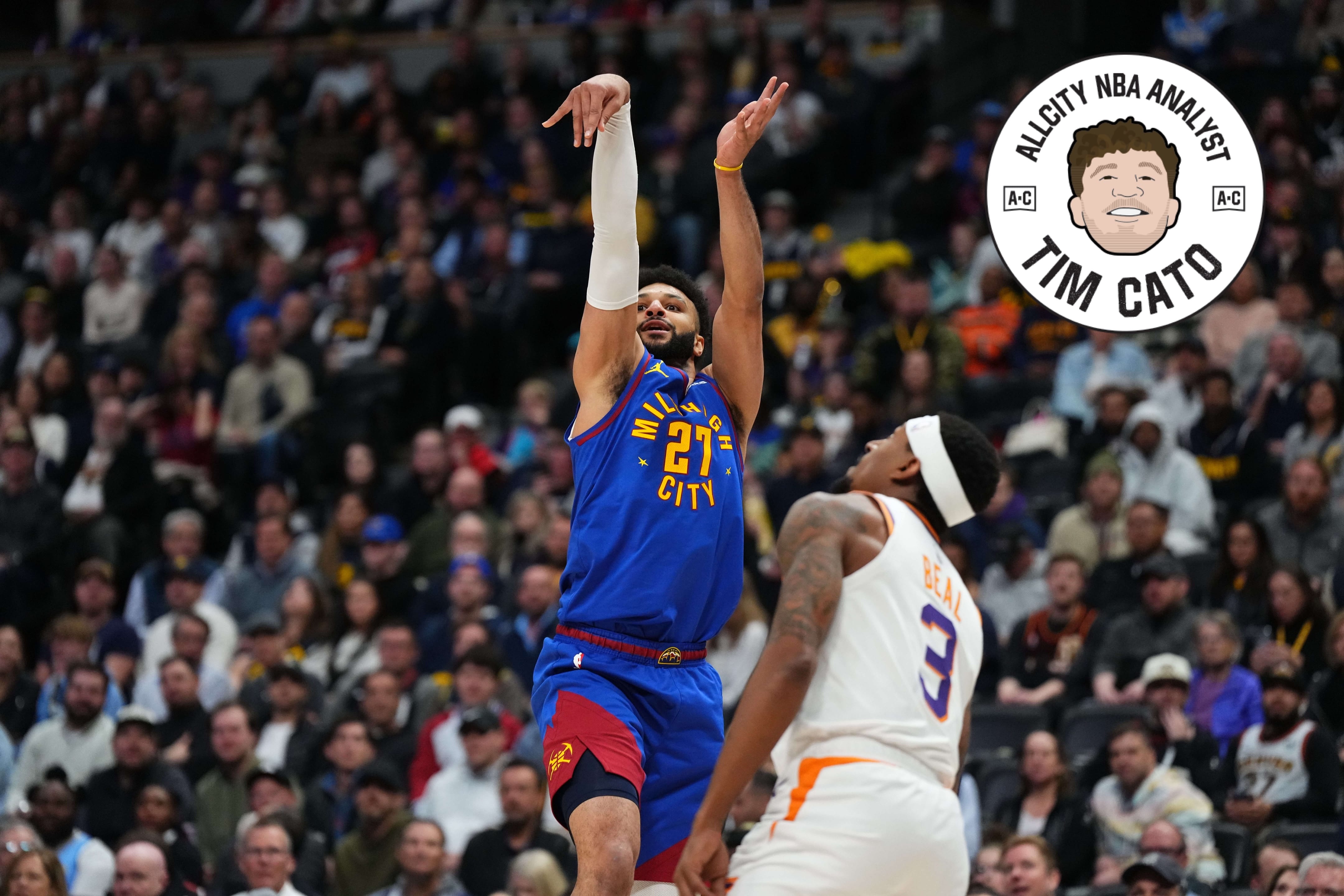
In October, during the league’s opening week, Jamal Murray received the ball at the death of the first quarter just steps away from his own baseline.
“Remember, heaves are not counted,” said Chris Marlowe, the Denver Nuggets’ longtime play-by-play announcer, as Murray dribbled twice towards two defenders, using up most of the 2.8 remaining seconds in the frame. As he approached them, they slunk away, allowing Murray to take one long stride between them and launch a shot from several feet behind the halfcourt line.
As the shot soared on a 56-foot trajectory, Marlowe added, “It’ll count if it goes,” and then continued, as the shot swished in, “And it goes!”

Murray’s shot counted. But it wouldn’t have been credited as his shot attempt if he had missed, of course, thanks to the league’s introduction of the heaves rule over the offseason. This season, the NBA has stopped assigning missed shots to players when taken at least 36 feet away from the rim within the final three seconds of any quarter.
“It’s about wanting to make every moment of the game competitive,” said James Jones, the league’s head of basketball operations, in an interview with NBA.com. “I think everyone knew what they were doing and why they were doing it. It was an unspoken understanding of ‘I know what you’re doing, but I can’t blame you.’ Because of the implication.”
The implication, of course, is that players weren’t shooting them. We’re all familiar with the past dance: Players would heave long shots, yes, but they would pause and dally, timing the shot’s release to come fractions of a second after the buzzer. Occasionally, they would even go in and not count. Mostly, though, it was a delicate balance intended to avoid the statistic of a missed shot.
But Murray’s make, and others like it, are fun. We like it when long shots go in, and they go in more often than you might expect. Since the 2013-14 season, there have been 6,413 heaves attempted from beyond the half-court line. Players have made 239 of them, which comes out to 3.7 percent. It’s rare, but it’s not impossible.
There’s an argument that players should always have been taking them. The league’s greatest ever shooter, Stephen Curry, has had no problem hoisting them up throughout his career, taking 123 shots past half court since the 2013-14 season and making seven of them. (If the 117 shots he missed hadn’t counted, his career 3-point percentage of 42.3 percent would be a whole half percentage point higher.) And it’s understandable.
“I hate it,” Zach Lowe said on his podcast shortly after the rule was enacted, representing this viewpoint. “I hate it. We’re letting these chickenshit players who won’t shoot heaves get off scot free. I liked exposing those players and lionizing the (Stephen) Currys, (Nikola) Jokics, J.R. Smiths, and (Payton) Pritchards of the world who wanted to win the game. Boo NBA. Boo chicken players.”
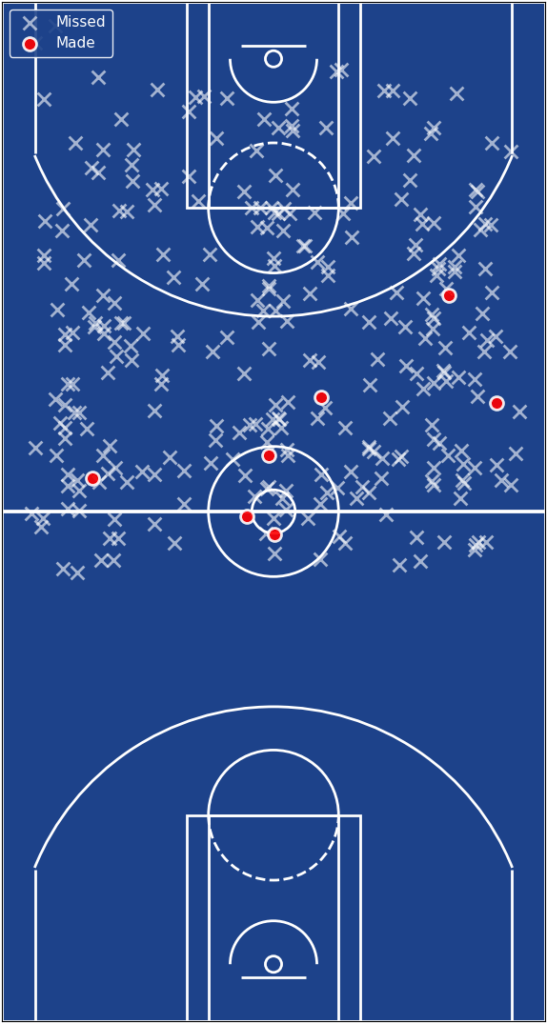
But no matter your viewpoint, the heaves rule has clearly worked. Last season, players had attempted 151 such shots through November, making three of them. This year, through that same timeframe, we’ve seen 294 such shots resulting in seven makes, according to data provided to us by the NBA. And the players, even those who attempted them prior to the rule, overwhelmingly enjoy the freedom that this rule has provided them. These are the number of heaves we’ve seen:
“I think it’s a great rule,” Raptors forward Garrett Temple said. “It always used to get me pissed off at my teammates (when they didn’t) shoot. It’s great that they don’t really count. I think it’s smart, it helps out teams more than hurts them. I think this is great, it’s a great rule.”
Temple claimed to always shoot his heaves when given the opportunity, although he only has five such shots recorded for his 16-year NBA career. But he was one of eight players who spoke to ALLCITY Network and approved of the rule’s addition.
“There won’t be any thought into it so much, so it’s good,” Raptors forward Ochai Agbaji said. “Everyone has individual goals for themselves. Now it’s nice that you don’t have to worry about that. Yeah, it’s just nice that it doesn’t feel like you wasted (a shot).”
Agbaji didn’t attempt any heaves last season, but he was a 40 percent 3-point shooter entering last season’s final game … until a 2-of-8 outing behind the arc dropped him to 39.9 percent. It’s individual goals like these that players do track meticulously, especially when they have financial bonuses attached to them, which many players do negotiate into their contracts.
For coaches, there’s also a small adjustment being made thanks to the increased proclivity for these shots being taken. For Raptors head coach Darko Rajaković, he took time during training camp to share data from the G-League, where the rule was trialed last season, resulting in a 44 percent increase in heaves. Thunder head coach Mark Daigneault has been more worried about how this rule will impact officiating, which he believes should be more strictly enforced.
“We covered it (in training camp),” Daigneault said. “You don’t want to foul in those situations. You just got to know more guys are going to shoot, and I think the officiating — they travel now more on those plays because you take it for granted that they aren’t going to shoot it. Just watching other teams, there’s a lot of guys who are taking steps to get those shots. So I think you’re going to see a couple of those once they calibrate to that.”
Maybe it was chicken not to take those shots before, individual statistics be damned. But the rule was meant to free whatever inhibitions players had for taking them, and there’s no doubt it’s working as intended this season.
Tim Cato is ALLCITY’s national NBA writer currently based in Dallas. He can be reached at tcato@alldlls.com or on X at @tim_cato.